
Dust control on commercial floors: why brooming is the problem
Dry brooming a concrete floor lifts respirable dust — including crystalline silica from concrete — into the breathing zone of whoever is holding the broom and everyone nearby. A filtered machine sweeper captures debris in a hopper and draws the working air through a filter, which makes it a practicable control where a broom is not.
Written by the Contract Sweeping operations team · Reviewed by Mark Scull, 30 years in commercial cleaning · Updated 14 September 2026
What is actually in floor dust
On a concrete floor, the fine fraction includes crystalline silica. On a food or manufacturing floor it includes product dust. In a warehouse it includes everything the forklifts have driven over. All of it is small enough to stay airborne long after the sweeping stops, and small enough to be inhaled.
Respirable crystalline silica is a recognised occupational hazard and is regulated in Australia, with workplace exposure standards that have tightened over time. We are a cleaning contractor, not an occupational hygienist, so for your obligations and current exposure limits the source to use is Safe Work Australia and Workplace Health and Safety Queensland rather than a contractor’s website.
What we can state from experience is the practical part: a broom moves that dust, a filtered machine removes it.
What a machine sweeper changes
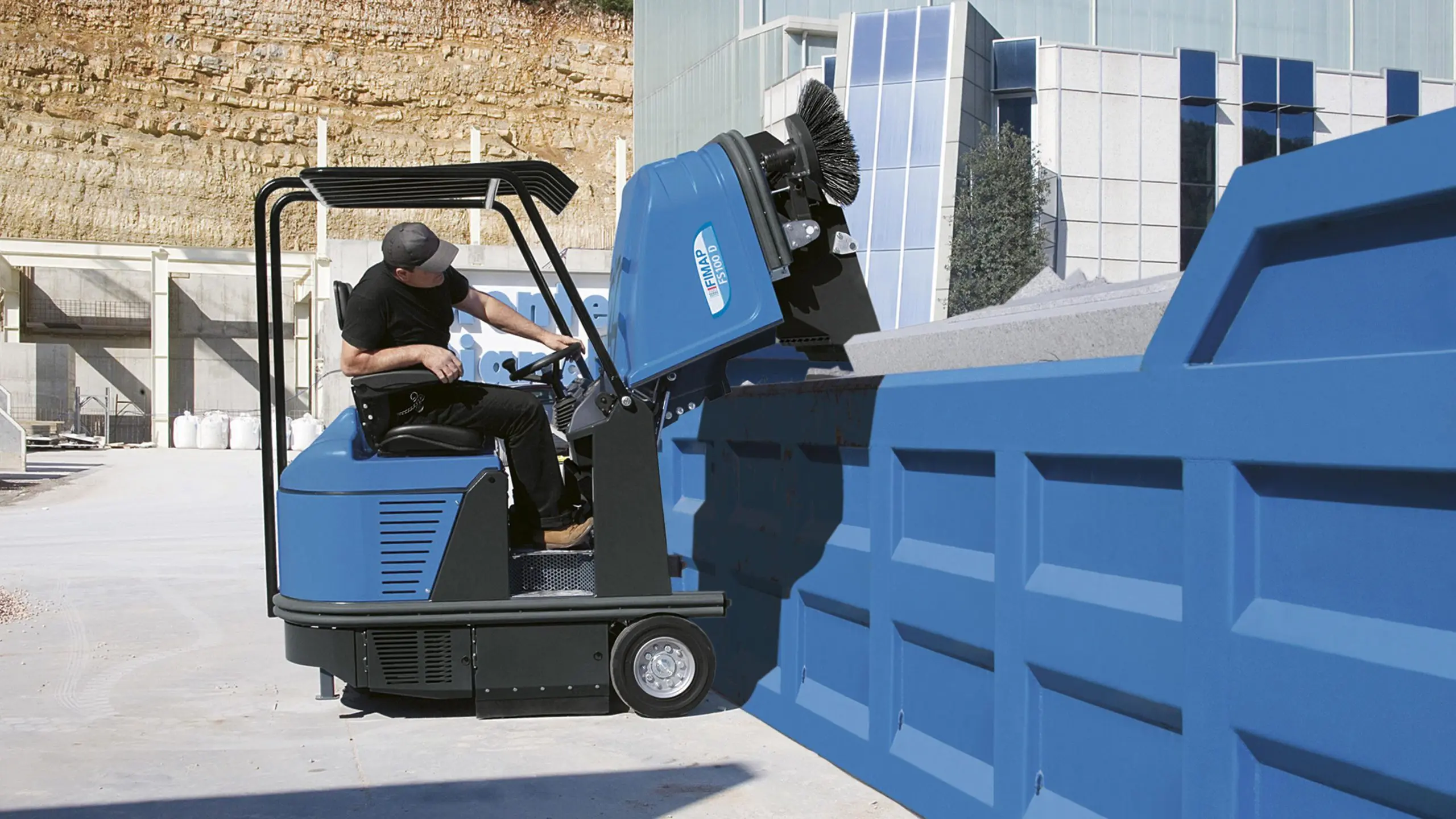
Three things, all mechanical. Debris goes into a sealed hopper instead of a pile that gets disturbed again. The air the brushing agitates is drawn through a panel or cartridge filter before it leaves the machine. And on external work, dust suppression damps the brush path so nothing plumes off site.
The difference shows up where dust settles: racking, stock, light fittings and plant. Sites that switch from brooming to machine sweeping notice the surfaces staying cleaner before they notice the floor.
It is also a control you can point at. In the hierarchy of controls, removing the dust at the source with engineered equipment sits well above giving somebody a broom and a dust mask.
How to make it auditable
Name machine sweeping as the control in your dust risk assessment for hard floors, rather than "regular cleaning". A named control with a schedule behind it is a materially stronger position.
Keep the dates. We log every visit — date, areas, machine — and that log is what turns a claim into evidence if an inspector, insurer or client auditor asks.
Review the frequency against what you find. If dust is visibly back within a day, the cycle is too long and the control is not working, whatever the schedule says.
Questions we get asked
Is dry sweeping with a broom against the rules?
It is not a named offence, but an employer must eliminate or minimise airborne dust so far as is reasonably practicable. Where a filtered machine is readily available, a broom is a hard control to defend. Check your specific obligations with Workplace Health and Safety Queensland.
Do your machines filter the air?
Yes. Commercial sweepers draw the working air through a panel or cartridge filter, and our external machines run dust suppression. That is the distinction between removing dust and relocating it.
Will you write our risk assessment?
No — that is your document, and an occupational hygienist is the right advisor for exposure assessment. We will describe exactly what our machines do and provide the attendance records so the control can be evidenced.
Does wetting the floor first work instead?
On unsealed concrete and hardstand, wetting creates mud and moves the problem rather than solving it. Suppression at the brush is different — it damps the dust at the point it is lifted, which is why the machines have it.
Put a real control on your floor dust
We will walk the site, recommend the machine and cycle, and log every visit so the control is evidenced.