
Sweeper and scrubber machines, explained
Twelve straight answers to the questions we are actually asked on site walks — how each machine works, when to sweep and when to scrub, what dust control has to do with your WHS duty, and where the money really goes. Written by the people running the machines across South East Queensland.
- —How does a sweeper machine work?
- —How does a floor scrubber work?
- —Should the floor be swept or scrubbed?
- —Why is dry sweeping with a broom a WHS problem?
- —What does a machine sweeper actually save?
- —What does a scrubber save compared with mopping or hosing?
- —Where does the debris a sweeper collects end up?
- —Can a warehouse be swept while it is operating?
- —How is outdoor hardstand different from a warehouse floor?
- —What does tracked-out material cost a construction site?
- —Is it better to hire a machine or use a contract cleaner?
- —Why is scrubbing better than hosing a floor down?
How does a sweeper machine work?
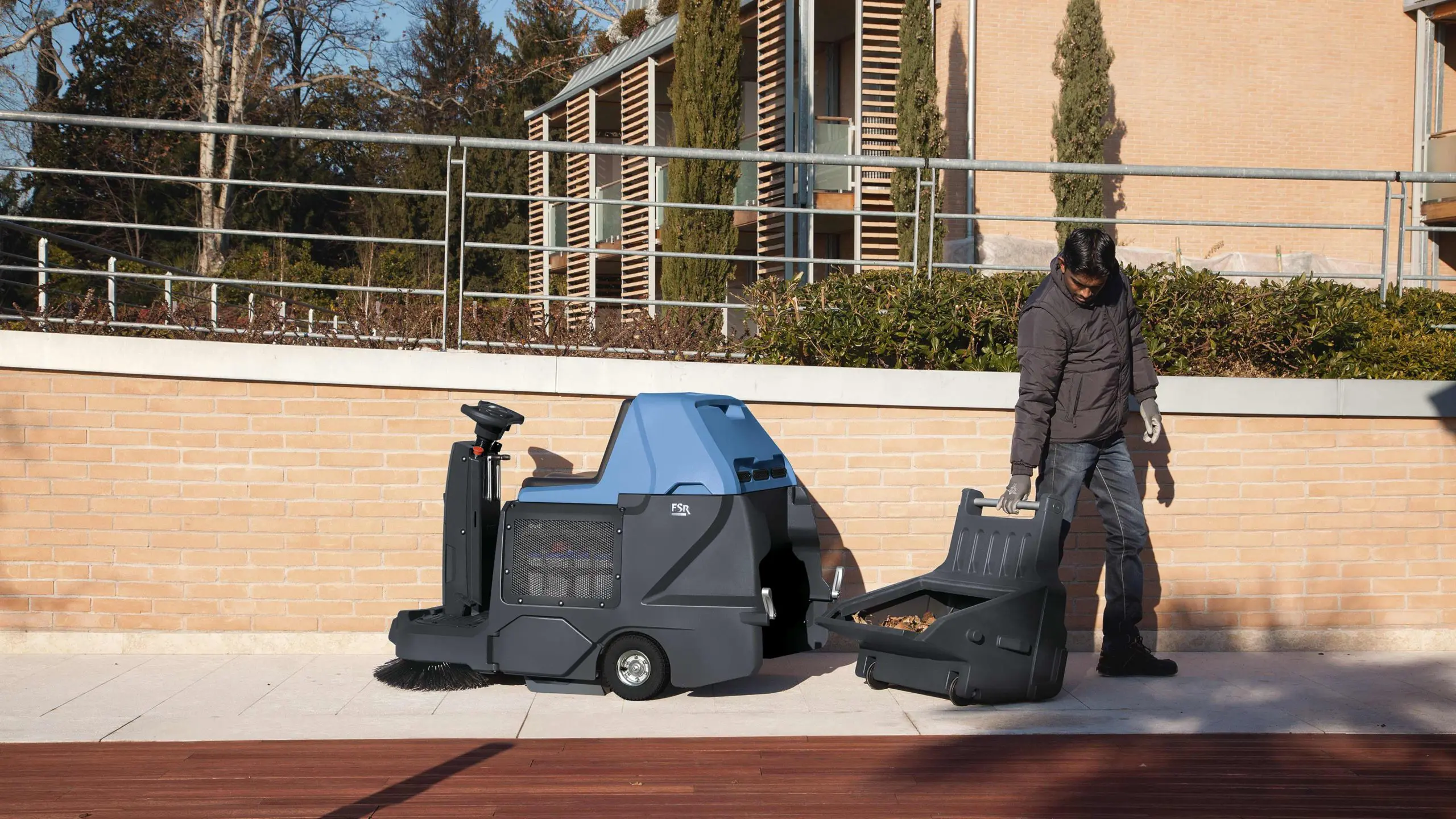
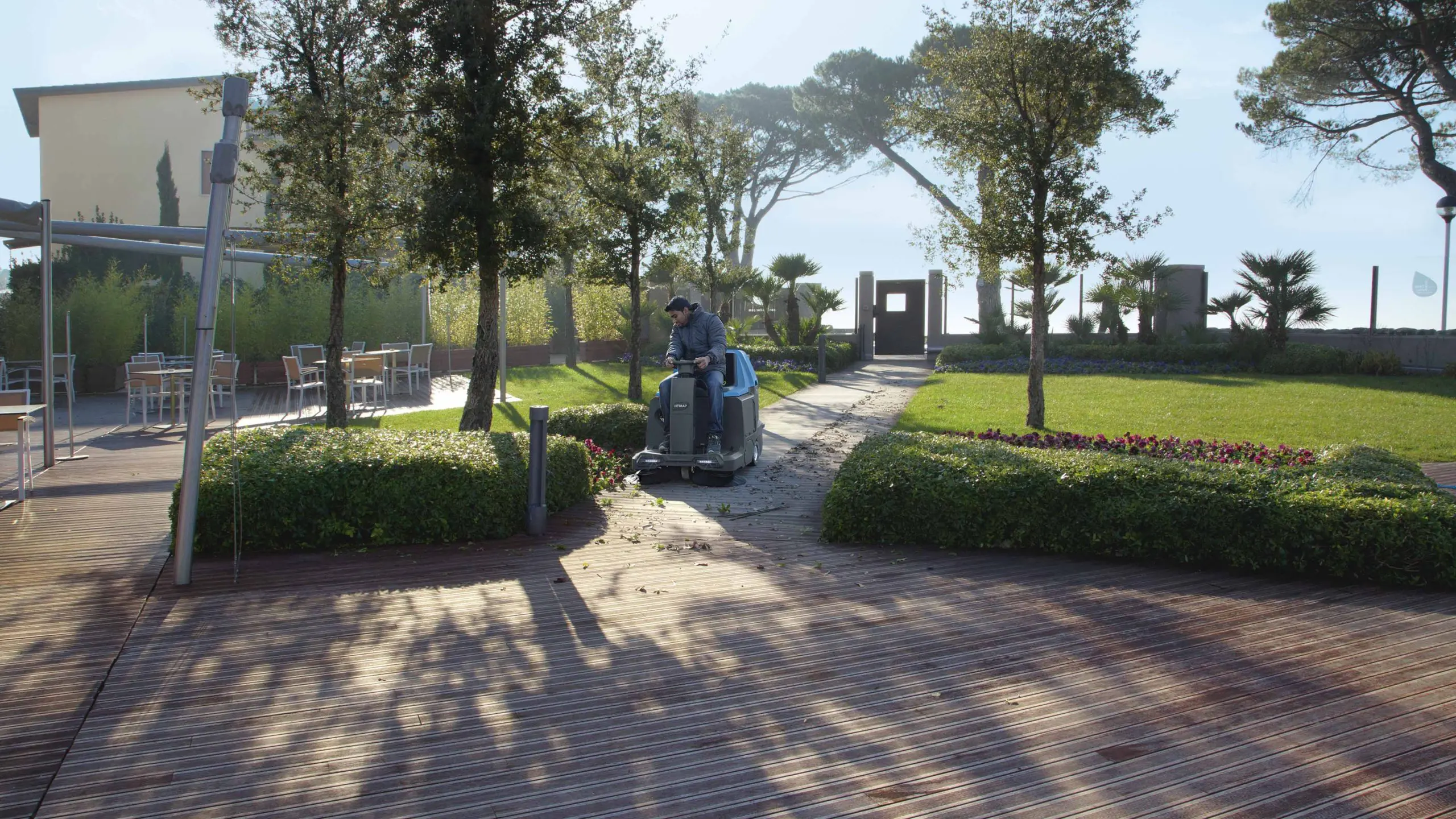
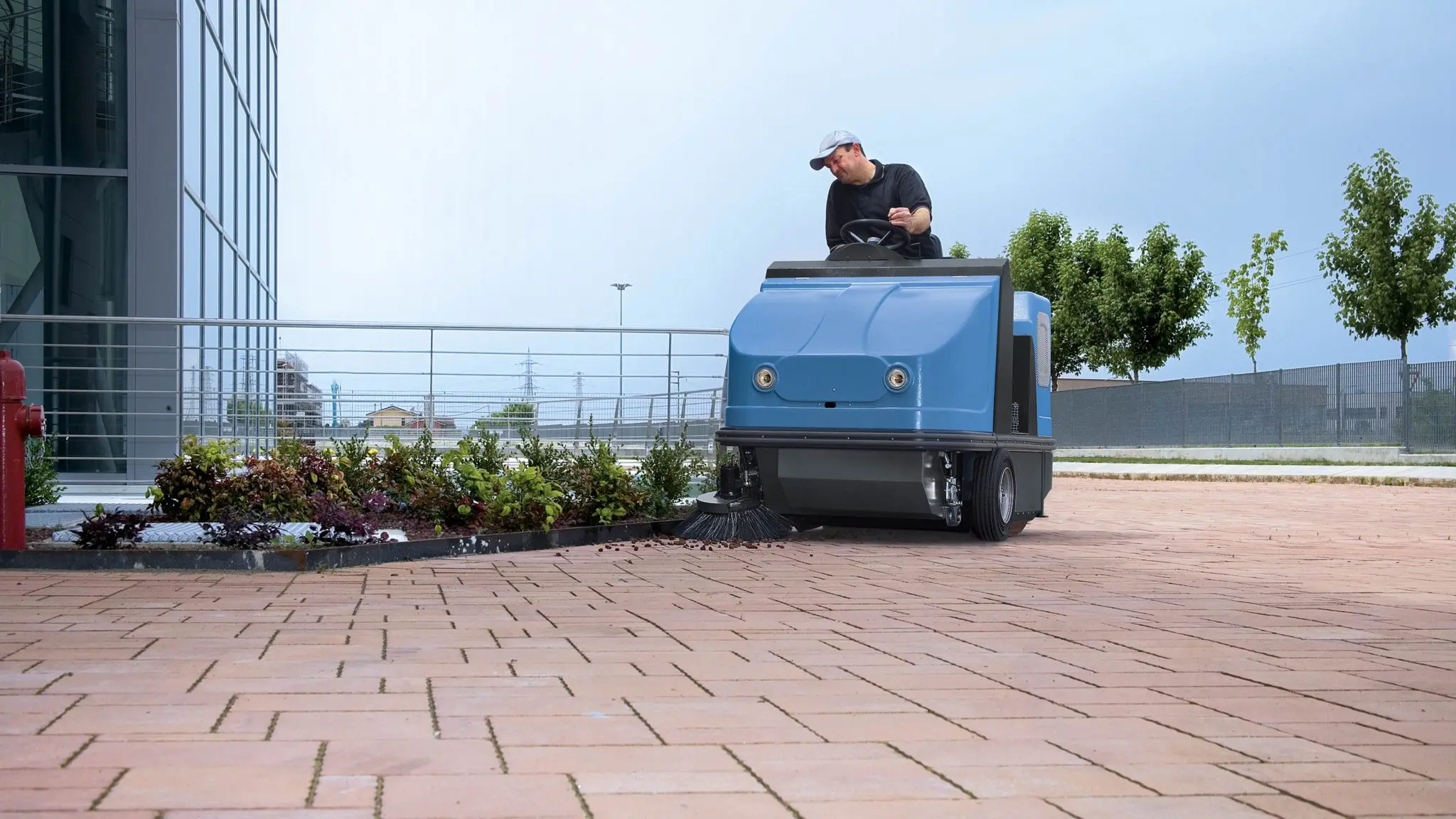
A sweeper machine uses a cylindrical main brush to flick loose debris up into an onboard hopper, while side brushes pull litter in from edges and kerbs. A vacuum fan draws the air through a filter, so the dust the brushing lifts is captured rather than thrown back into the room.
The main brush sits under the machine and spins backwards relative to travel, throwing grit, sand, leaves and packaging up into the hopper behind it. Side brushes reach into the places the main brush cannot: kerb lines, wall junctions, racking legs and the back of a loading bay.
The part most people miss is the filter. Brushing anything dry puts fine particles into the air, so a commercial sweeper runs a vacuum system that pulls the dust through a panel or cartridge filter before the air leaves the machine. That is the difference between a sweeper and a broom: the broom relocates the dust, the machine removes it.
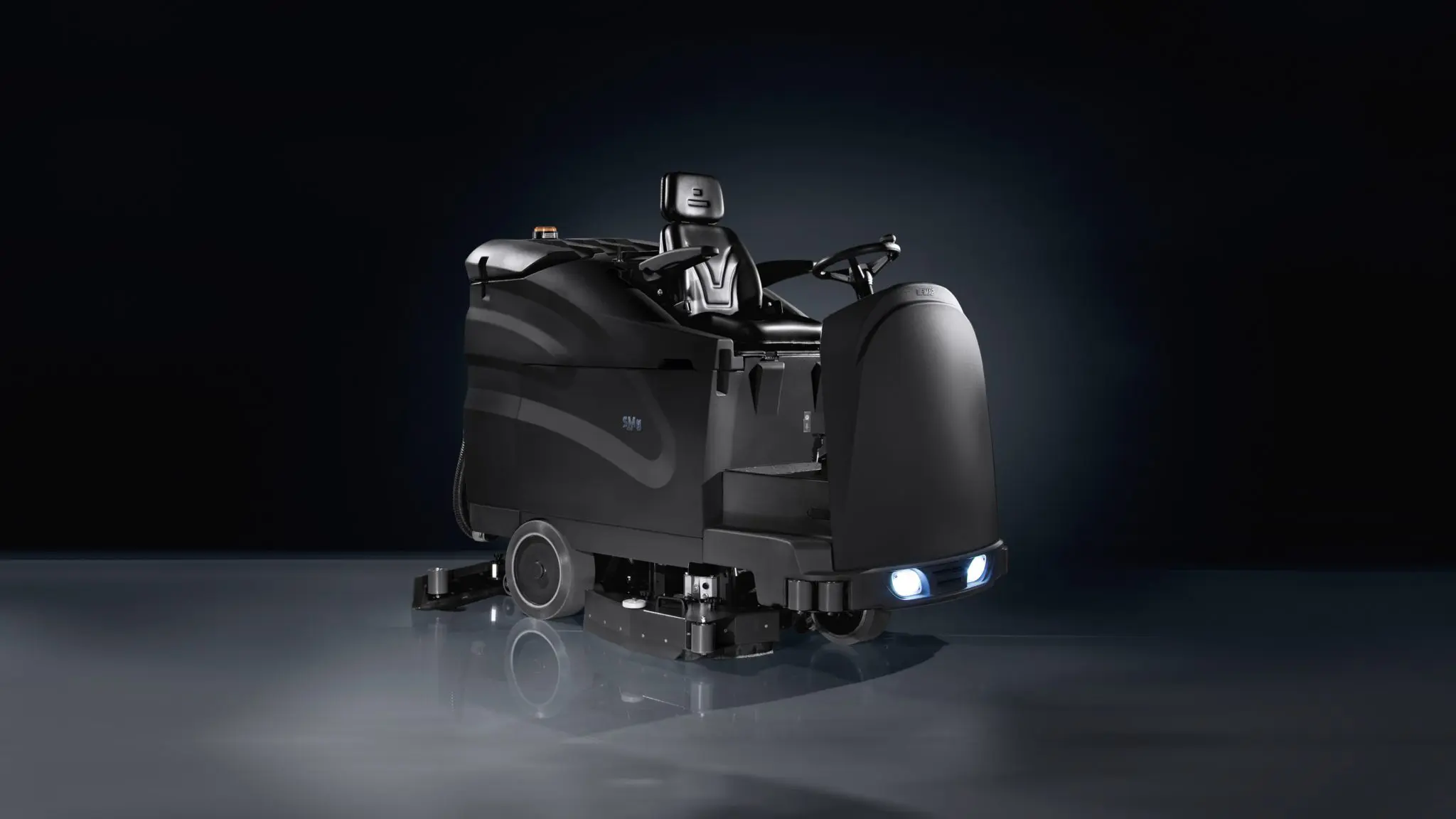
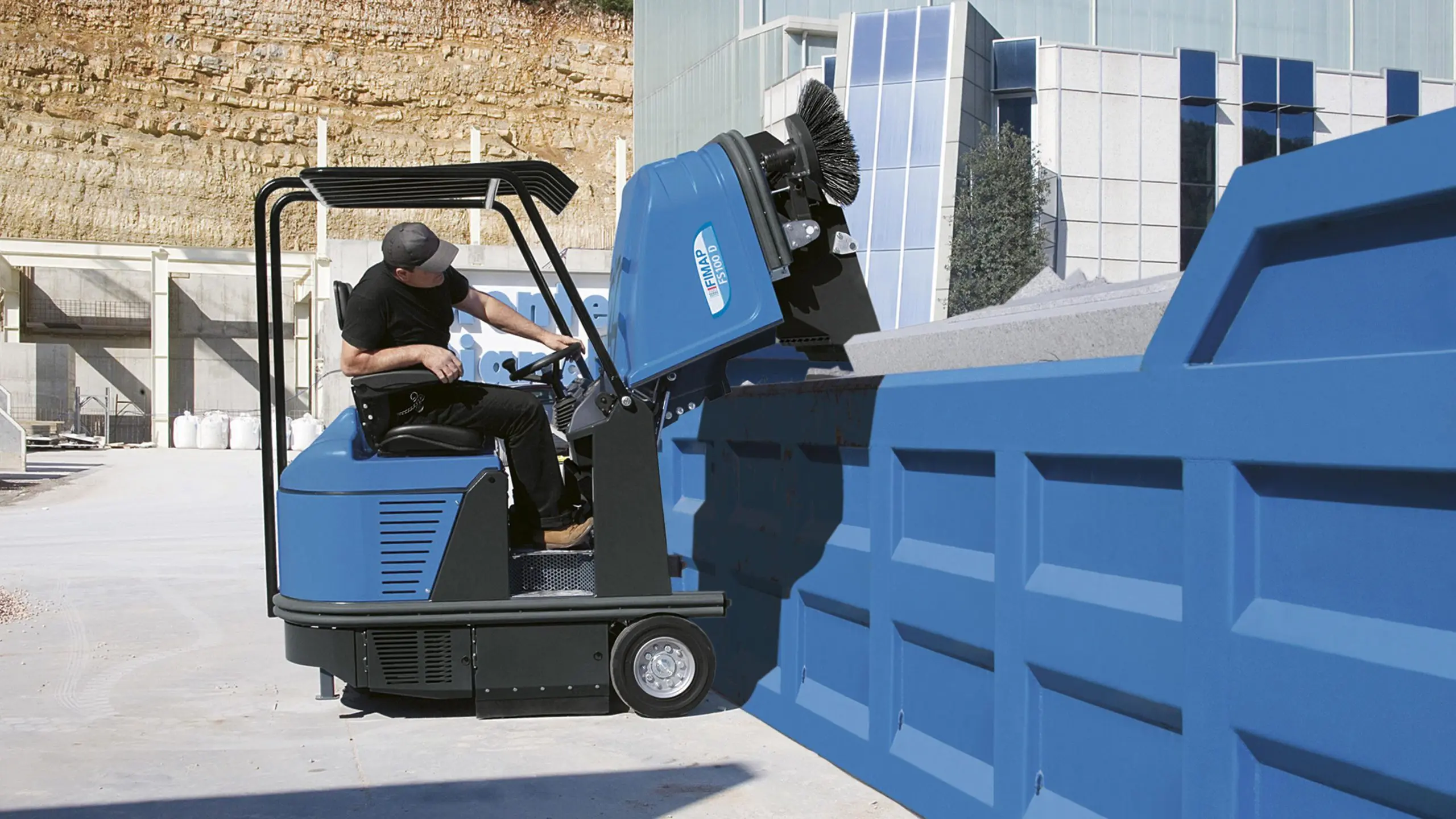
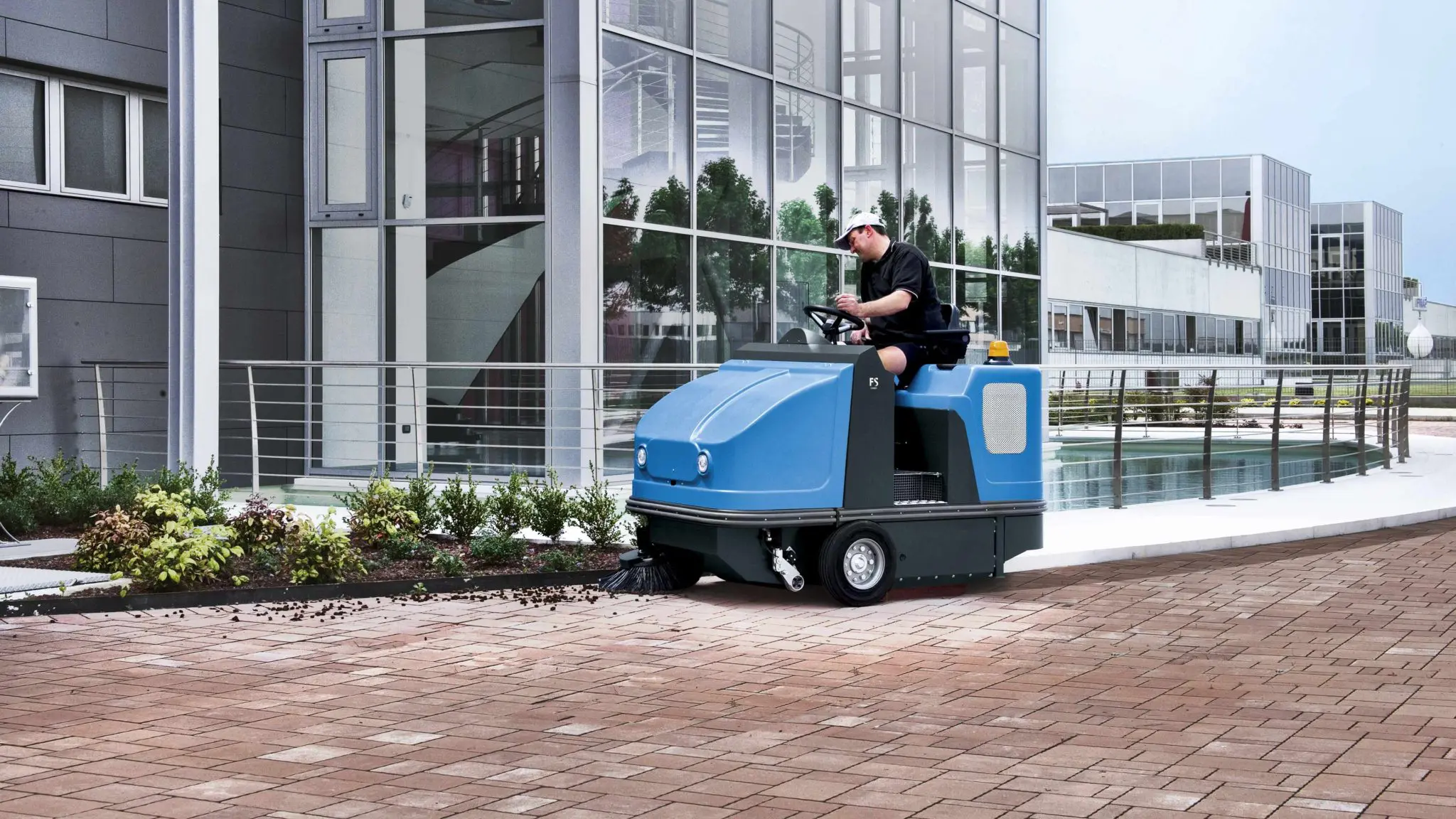
Sizing follows the site. Hand-held and walk-behind sweepers suit aisles, docks and tight yards. Ride-on machines cover warehouse floors and car parks in a fraction of the time. Truck-mounted units are for roads, large hardstand and anywhere the hopper needs to hold a tonne rather than a bucket.
How does a floor scrubber work?
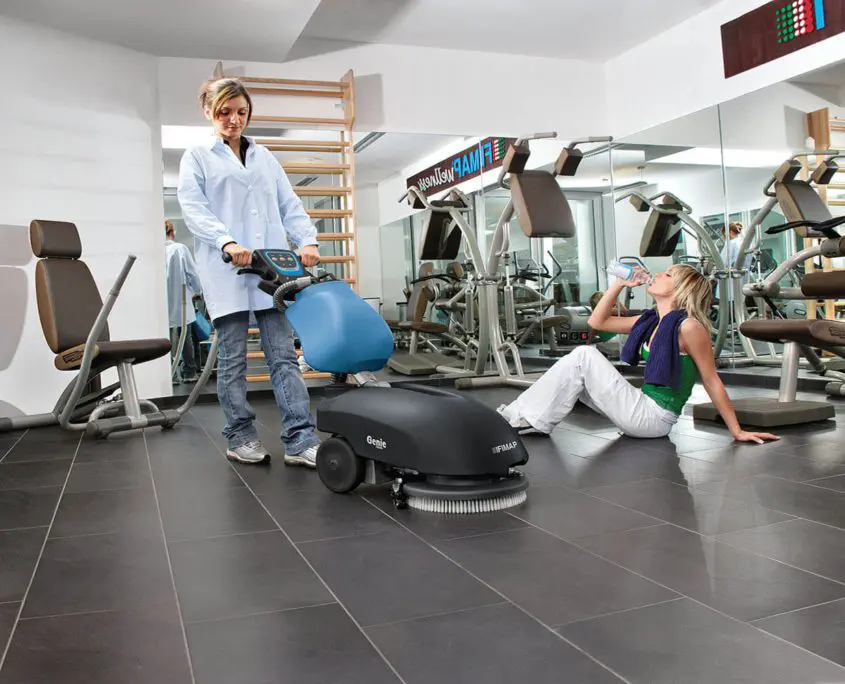
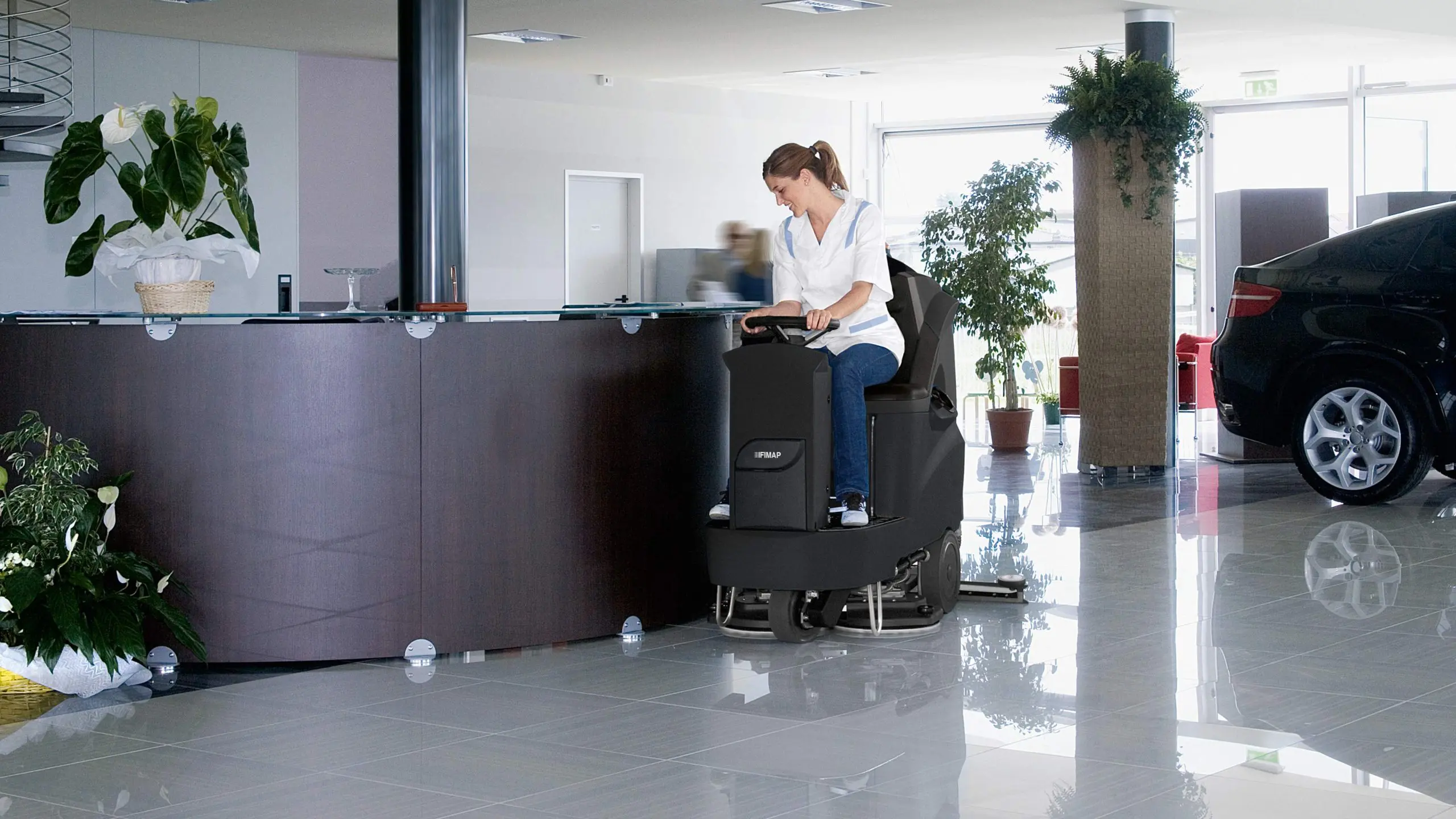
A floor scrubber lays down water and detergent, agitates the floor with counter-rotating brushes or pads to break the bond between grime and surface, then vacuums the dirty solution back through a trailing squeegee. The floor is left clean and dry enough to walk on immediately.
The sequence matters. Solution goes down first so the detergent has contact time; the brush deck does the mechanical work; the squeegee and vacuum recover the water along with what it has lifted. Skip the recovery step — as hosing down does — and the dirt simply settles somewhere else on the floor.
Brush pressure and pad grade are chosen for the surface. Sealed concrete and epoxy take a firmer pad than vinyl or polished tile, and food-handling areas often need a brush rather than a pad so the deck can be stripped and sanitised.
Because the machine recovers its own water, a scrubber uses a small fraction of the water a hose does and leaves no slip window behind it. On a trading site that is the deciding factor: the area is back in use as the machine leaves it.
Should the floor be swept or scrubbed?
Sweep loose material, scrub bonded material. Dust, grit, sand, leaf litter and packaging sit on top of the surface and belong in a sweeper hopper. Tyre marks, oil film, spilled product and traffic grime are stuck to the surface and need water, detergent and brush pressure to release.
Most commercial sites need both, in that order. Sweeping first removes the loose grit that would otherwise turn a scrubber into a grinding machine and wear the pads out early. Scrubbing then lifts what is left behind.
See the full sweeper vs scrubber comparison — nine rows covering surfaces, water use, drying time and which to run first.
Why is dry sweeping with a broom a WHS problem?
Dry brooming lifts respirable dust into the breathing zone of whoever is holding the broom and everyone nearby. Under Australian WHS law a business must eliminate or minimise airborne dust so far as is reasonably practicable, and a filtered machine sweeper is a readily available control that a broom is not.
Silica is the reason this matters on concrete. Fine particles from concrete dust, along with product dust in food and manufacturing sites, stay suspended long after the sweeping has finished, and they settle on stock, racking and equipment.
A commercial sweeper controls this three ways: it captures debris in a hopper rather than a pile, it draws the working air through a filter, and dust-suppression models damp the brush path on external work. Nothing is being redistributed.
If your site has a dust risk assessment, machine sweeping is worth naming in it as the control. It is also worth recording sweep dates — an auditable schedule is far stronger evidence than "we sweep regularly".
What does a machine sweeper actually save?
Labour and rework, mainly. One operator on a ride-on sweeper covers ground in an hour that a crew with brooms cannot clear in a shift, and because the debris leaves the site in a hopper it does not migrate indoors, onto stock, or into drains that later need clearing.
The visible saving is time. What matters more is the damage that stops happening: grit tracked inside stops scratching sealed floors, blocked sumps stop needing emergency clearing, and forklift tyres last longer on a clean surface.
Contract scheduling adds the rest. A site on a fixed cycle is quoted at route rates; the same work as an urgent one-off callout costs more because the machine and operator are being pulled off a planned day.
We will tell you when a machine is not the answer. A small car park swept fortnightly costs less grouped with other nearby sites than run on its own, and we would rather say so than sell an inefficient visit.

What does a scrubber save compared with mopping or hosing?
Water, drying time and slip risk. A scrubber recovers the water it puts down, so it uses a fraction of what a hose does, produces no run-off into drains, and leaves the floor dry behind the squeegee instead of closing the area off for an hour.
Mopping has the same flaw as hosing on a large floor: the water gets dirty, and after that the mop is moving soil around rather than removing it. A scrubber applies clean solution and recovers dirty solution continuously.
On trading sites the drying time is the commercial argument. No wet floor means no barricades, no cones through a walkway, and no incident report if somebody walks through it anyway.
Trade-waste rules also favour recovery. Detergent-laden run-off into a stormwater drain is a compliance problem; a recovery tank emptied to sewer is not.
Where does the debris a sweeper collects end up?
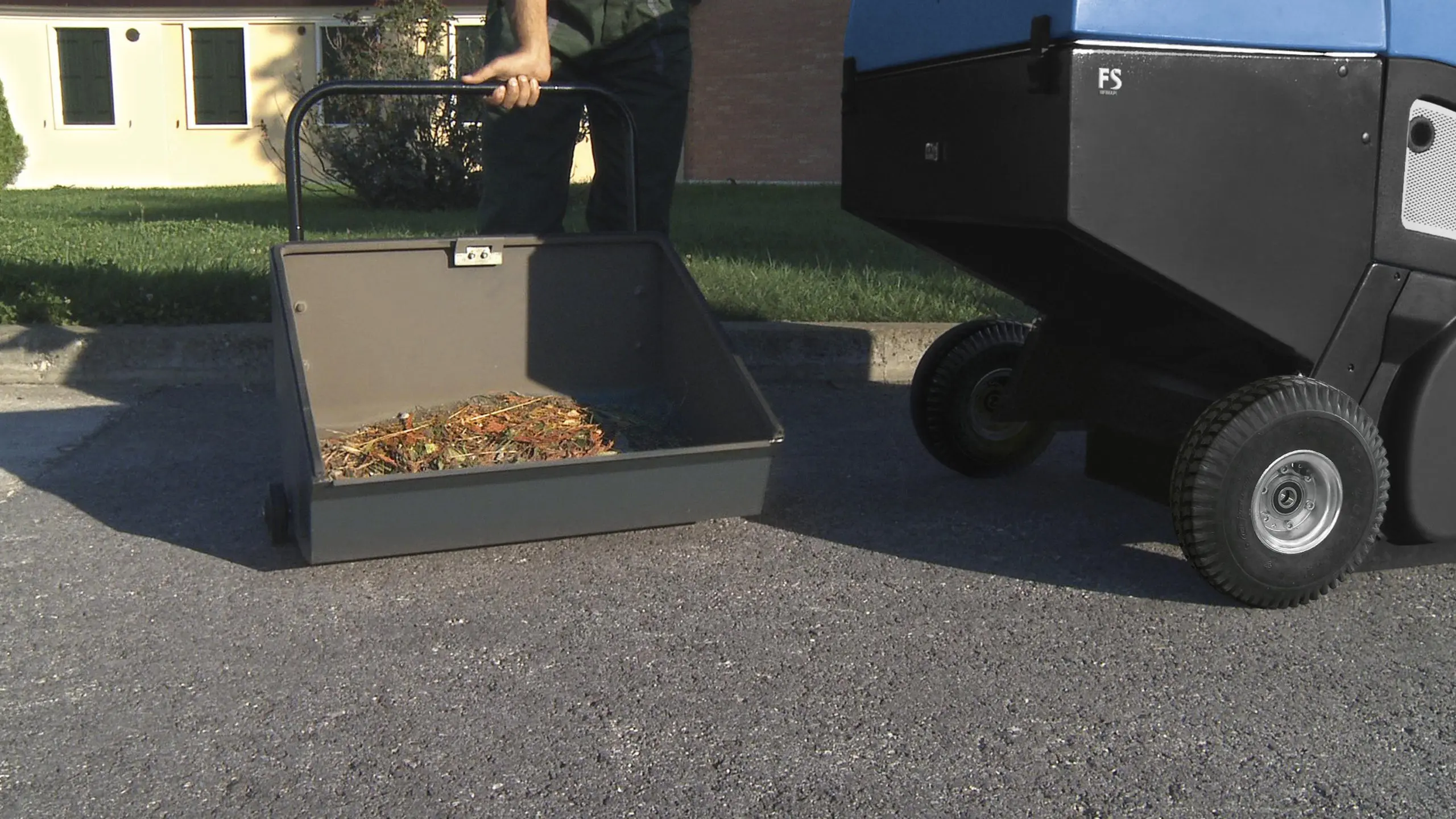
Into the machine hopper, then into your bin or a licensed waste facility, depending on what it is. Hopper capacity decides how often the machine stops, which is why machine size is matched to the volume and weight of material a site actually produces.
General sweepings — dust, grit, leaf litter, packaging — normally go into the site waste stream with your agreement. Heavier construction material or anything contaminated is handled separately and disposed of appropriately.
This is where hopper size shows up in the price. A walk-behind that has to be emptied every fifteen minutes on a gritty yard is slower and dearer per square metre than a ride-on that runs the full area in one pass.
If your site separates waste streams or has a recycling requirement, tell us at the site walk. It changes how the run is set up, not whether we can do it.
Can a warehouse be swept while it is operating?
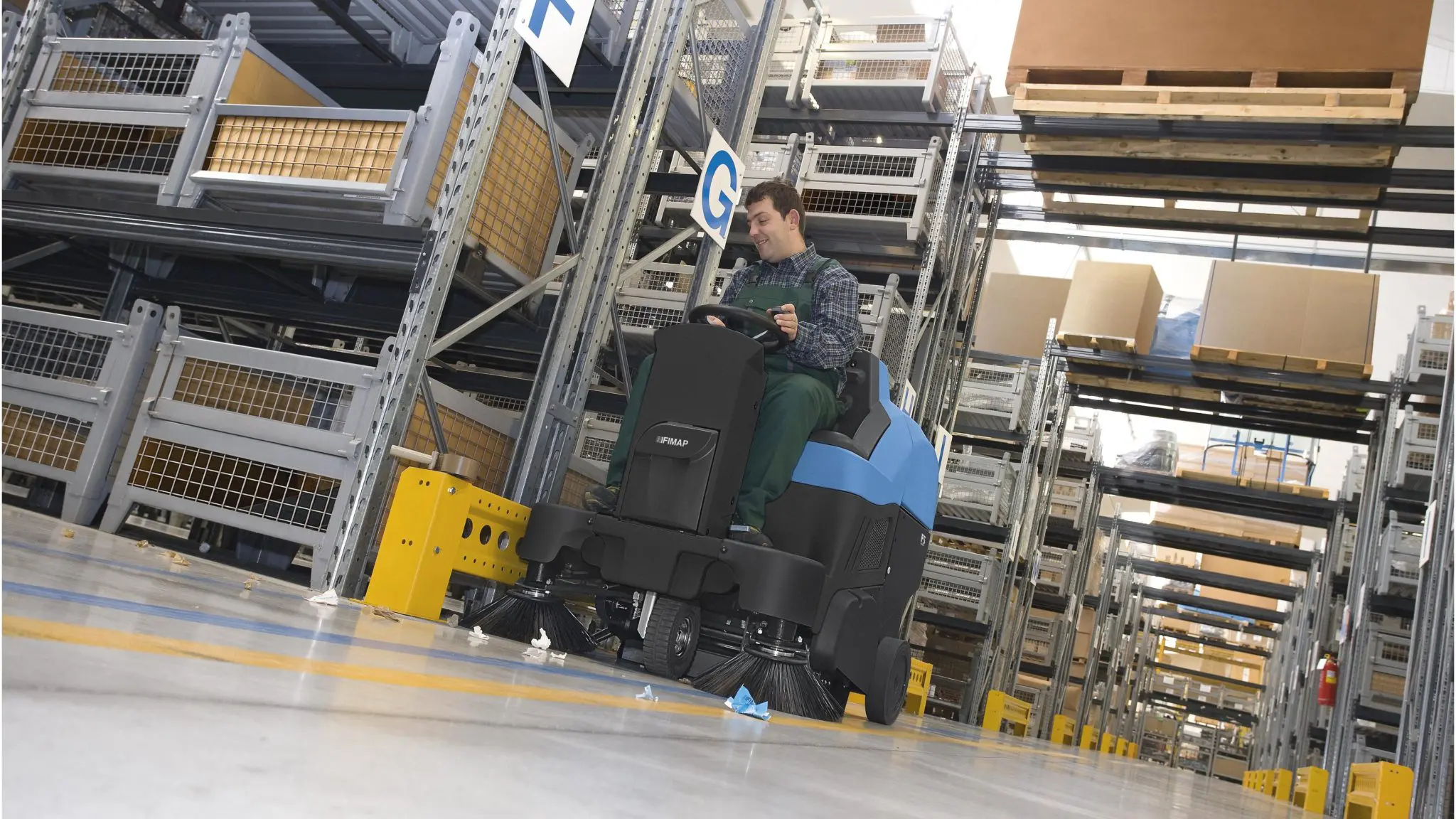
Yes, and most of ours are. You rarely get an empty warehouse, so we set a pass order with the site supervisor — working with the flow of forklift traffic rather than against it, taking aisles as they free up, and leaving dock areas until the last delivery is through.
Machines are sized for the aisle, not the building. A ride-on that is fast in an open floor is the wrong tool between narrow racking, where a walk-behind gets closer to the legs and the pallet edges.
Access rules come first. Our operators are site inducted, work to your traffic-management plan, and stop for your equipment — not the other way around.
For sites that cannot release floor space at all, the answer is a night or weekend window. Most of our warehouse sweeping is done outside production hours for exactly that reason.
How is outdoor hardstand different from a warehouse floor?
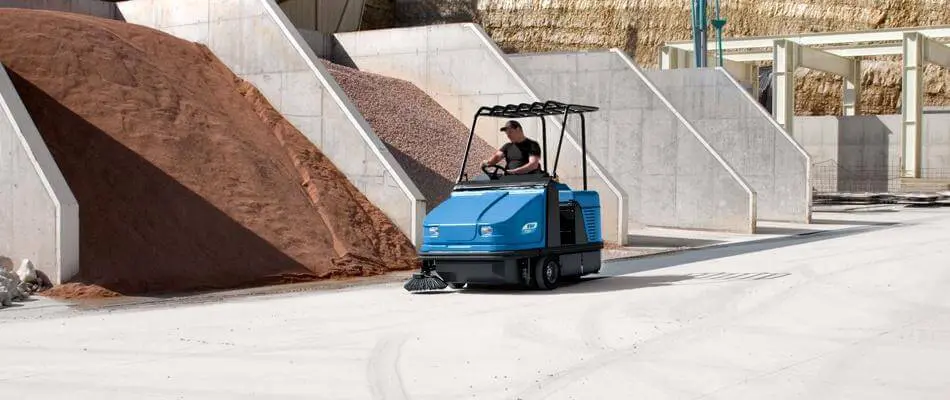
The material is coarser and the area is larger. External concrete, bitumen and pavers collect stone, sand, leaf litter and packaging rather than fine dust, so outdoor work needs a machine with suction, hopper capacity and dust suppression rather than a fine filter alone.
Weather sets the schedule. Wet material clogs a brush and dries into the surface, so we sweep yards on a cycle that suits the season — more often through storm season and leaf fall, less often in dry months.
Drainage is the second consideration. Sweeping the hardstand is what keeps grit out of the sumps and grated drains that otherwise need clearing under pressure after the first heavy rain.
Unsealed surfaces are swept, not scrubbed. There is no seal for detergent to work against, and wetting a dusty yard just makes mud.
What does tracked-out material cost a construction site?
More than the sweep. Mud and stone carried onto a public road by site traffic is a hazard for motorcyclists and cyclists, a nuisance complaint waiting to be lodged, and in Queensland a matter councils can and do act on. A scheduled sweeper is the cheap end of that problem.
The obligation sits with the site, not the driver. Once material is on the carriageway it is the site that has to remove it — at short notice, and at a premium rate.
Regular sweeping of the crossover, the access road and the carriageway either side of the gate keeps the volume small enough to stay manageable. Frequency follows truck movements: a busy earthworks phase may need daily attention, a fit-out phase weekly.
Sweep records help here too. Being able to show a schedule and dates is a materially better position than an assurance if a complaint is ever made.
Is it better to hire a machine or use a contract cleaner?
Hire makes sense when you have someone trained to run the machine and enough work to keep it busy. Contract cleaning makes sense when you want the result without owning the maintenance, the training, the storage, the consumables or the downtime when a machine is out of service.
The real cost of a machine is not the purchase or the hire rate. It is batteries, brushes, pads, filters, servicing, a charging point, somewhere to store it, and an operator whose time you are paying for either way.
Volume decides it. A large distribution centre cleaning daily often justifies its own machine and operator. A site cleaning weekly or fortnightly almost never does.
A middle path exists: we run the machine on contract and your team handles daily spot cleaning. That keeps the heavy work on a schedule without you carrying the asset.
Why is scrubbing better than hosing a floor down?
Hosing moves dirt to the nearest drain and leaves the surface wet. A scrubber applies a controlled amount of solution, agitates the grime and vacuums the water straight back up, so the soil leaves in a tank rather than in the stormwater and the floor is dry immediately.
Water volume is the first difference, and on a metered site that is a line item. The second is run-off: detergent and oily residue entering stormwater is a trade-waste breach in most jurisdictions.
The third is the result. Hosing dilutes and spreads a film; scrubbing breaks the bond mechanically and removes it. Floors that are only ever hosed tend to grey off over time — that grey is the film, not the concrete.
Hosing still has a place for washing down external bins and bays where recovery is not practical. Inside a building, a scrubber is the right tool.
Still not sure which machine your site needs?
That is what the site walk is for. We look at the surface, the traffic and the access window, then tell you plainly what it needs — sweeping, scrubbing, or both.
Related: Sweeping services · Scrubbing services · Street sweeping · Pressure cleaning